
Home Radon Monitor Benefits
Home Radon Monitoring: See the Bigger Picture
A home radon monitor makes radon, an invisible gas, visible by continuously tracking radon levels. It provides real-time results, giving you a clearer picture of radon levels at all times. This ongoing insight can help you better understand your home’s radon levels year-round and make informed decisions about your indoor air.
Choose a Home Radon Monitor You Can Trust
Not all radon monitors are created equally. Features, accuracy, quality, and price can vary, so it’s important to choose a monitor from a reputable company. Look for a home radon monitor backed by a company with experience in radon and monitoring technology. A good monitor should also come with a warranty and access to knowledgeable experts who can provide guidance and technical support when you need it.
What is the Difference Between a Home Radon Monitor and Professional Radon Monitor?
Both home and professional radon monitors measure radon levels in indoor air, but they are designed for different needs. A home radon monitor is designed for homeowners who want to easily monitor radon levels in their own home. These monitors provide ongoing readings over time, helping you see how radon levels change and identify when levels may be elevated. They are typically designed for simple setup and everyday use.
A professional radon monitor is designed for trained radon measurement professionals who conduct radon testing for clients. These instruments typically offer advanced features for professional testing, documentation, quality control, and reporting, and may be subject to specific certification or performance requirements.
Radon Readings Can Fluctuate.
This is What You Need to Know.
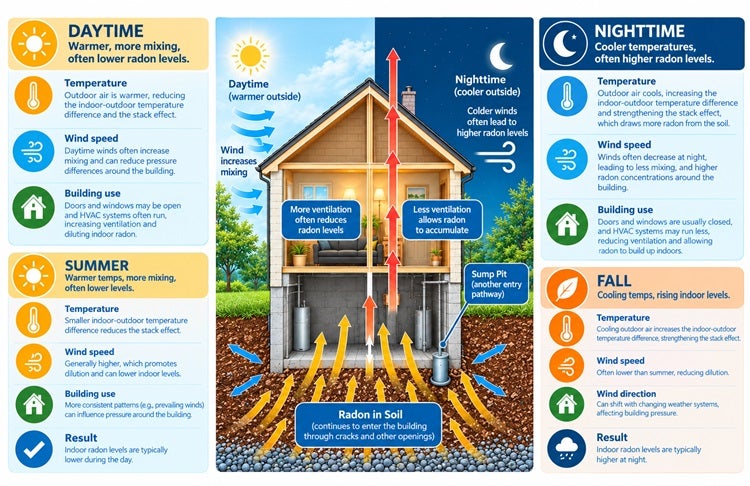
Radon levels can fluctuate and your home will have seasonal tendencies based on weather and occupancy habits.
Day to night temperature changes, precipitation, wind speed and direction, and storm fronts all impact indoor radon concentrations because air pressure pulls radon out of the ground and into the home.
Cooler temperatures often increase the negative pressures inside the home so there is a tendency in most homes to have the highest radon concentrations during nighttime hours and during the winter heating season.
A radon monitor helps you see these fluctuations over time, giving you a clearer picture of your home’s long-term radon levels.
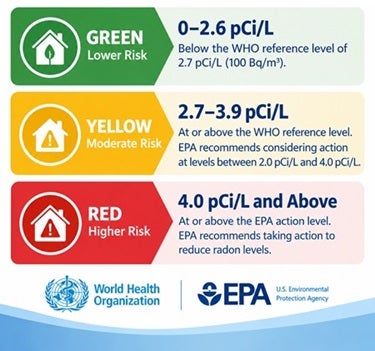
Radon Level Guidance: Interpreting Readings and Thresholds
The color ranges shown can help you understand how your radon result compares with guidance from the World Health Orgnanization (WHO) and Environmental Protection Agency (EPA).
Seeing Yellow or Red? Just Remember to Look at the Trend.
Radon levels naturally fluctuate from day to day and season to season. Weather conditions such as changes in temperature, wind, rainfall, barometric pressure, and soil moisture, along with ventilation and HVAC operation, can temporarily affect how much radon enters and accumulates in your home. Because of these fluctuations, a few days of elevated readings doesn't necessarily represent your home's long-term radon level. Don't be alarmed. Continue monitoring to see whether elevated readings persist and establish a clearer trend over an extended period of time. What does this mean? If your daily average is at 4.0 pCi/L or higher for several days in a row, then action is highly recommended. You have options: Consider placing a short-term radon test to provide another measurement to compare with your monitor's results. A short-term radon test an help you make a more informed decision before determining whether further action is needed. You might also consider radon mitigation. A certified radon professional can evaluate your results, assess your home, and recommend a radon mitigation system designed to reduce radon levels. It's encouraged to contract a professional who follows ANSI-AARST Radon Standards.
Monitor the trend. Confirm the results. Get professional guidance when needed.
Where Should I Place My Radon Monitor?
Think about where you and your family spend the most time on the lowest regularly occupied level of your home. That's usually the best place to monitor your everyday radon exposure.
Follow these placement guidelines:
- Place the radon monitor in a frequently occupied area where you spend time.
- Set it on a table, shelf, or other stable surface, approximately 2–7 feet above the floor.
- Keep the radon monitor away from windows, doors, exterior walls, vents, fans, and direct airflow.
- Avoid placing the radon monitor in bathrooms, kitchens, crawl spaces, or other areas with high humidity or unusual air movement.
- Keep the radon monitor away from direct sunlight and sources of heat or cold.
- Don’t place anything directly over or around the radon monitor that could interfere with airflow.
How Many Radon Monitors Should I Have in My Home?
One is better than none! However, you may want to place one monitor on each floor if there are frequently occupied spaces on different levels of the home.
If you own a second home, vacation or rental property, consider additional monitors for these properties too. Radon comes from naturally occurring uranium in the soil beneath and around homes and every property sits on different ground conditions. The type of soil, foundation, construction, and other factors can affect radon levels, so you shouldn't assume one home's radon levels will be the same as another's. The best way to know your radon levels is to test or monitor your indoor air.