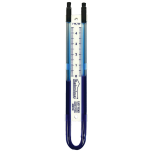
Direct Pipe Mount Information (Horizontal and Vertical Pipe)
Pipe Adapter Installation: When attaching the pipe adapter for the alarm, first make sure the pipe is clean, dry and free of any debris. Peel back the protective film on the mounting tape and insert the assembled alarm/bracket assembly into the drilled hole, making sure it is level, and firmly press in place to seat mounting tape. Note: Adapter must be pressed firmly against pipe for 30 seconds to ensure that the 3M tape bonds to the pipe and bracket surfaces.
Alternative Pipe Adapter Mounting: Once the selected adapter is installed (Note: make sure that the connector elbow is NOT installed), slide off alarm body from adapter and attach the adapter plate using a flat-head screw. Regardless of adapter orientation (horizontal or vertical in relation to the alarm), install the screw at 9 or 3 o’clock so that the screw does not interfere with sliding the RSA1 onto the adapter.
A radon system alarm is a safety device that provides audible and visual alerts if your radon mitigation system loses suction or stops operating properly. It notifies you instantly if the system requires attention, helping ensure continued protection from radon gas.
Radon industry standards (ANSI-AARST) require an alarm so homeowners can quickly detect fan failure or low pressure, both of which reduce the effectiveness of a radon mitigation system. It’s a critical part of maintaining a safe home.
It means your radon system may have insufficient suction. The fan may be off, blocked, or malfunctioning. Alternatively, the system tubing may be disconnected. Contact a radon professional to diagnose the issue.
Yes, you can purchase the alarm yourself and have a licensed radon mitigation professional handle the installation. Many homeowners choose to contact a professional to ensure the alarm is installed correctly and fully compliant with ANSI-AARST radon system standards.
If you’re unsure whether the alarm is functioning, start by checking the battery, verifying the tubing connection, and confirming the unit is securely mounted. You can also perform a quick test by briefly disconnecting the tube, which should activate the alarm. If you are still unsure, you can contact a radon professional to do a system check or you can contact the support team at Radon.com.